National Theater of Costa Rica
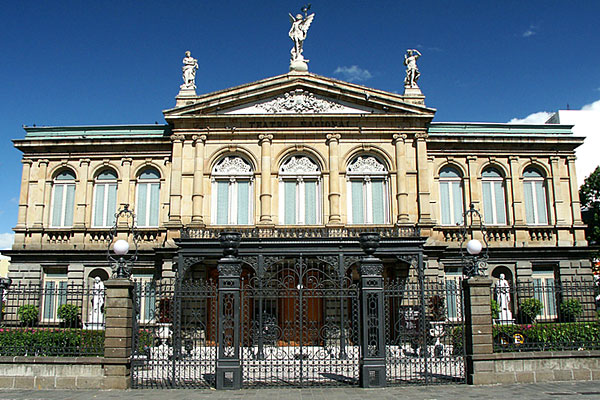 National Theater of Costa Rica (Second Avenue between Street 3 and 5, city center, San Jose): this is one of the most beautiful buildings in San Jose and is considered a reference point there. During the country’s agricultural boom in the 1890s, the wealthiest residents of San Jose (especially the European expatriates who were involved in Costa Rica’s coffee and banana export sector) wanted an opera house (both for theatrical productions as for operas). At his request, and with initial financing through an export tax on coffee (which later became a general tax on imports), this opera house was completed in 1897 (modeled after the Paris Opera).
The statues of the German composer Ludwig van Beethoven and the Spanish playwright Pedro Calderón de la Barca greet visitors who enter the opera house. Once inside, visitors walk on Italian marble, Carrara, adorned with bronze ornaments and layers of 22 carat gold. The ceiling is covered in frescoes and, although it is not as famous as Michelangelo’s Sistine Chapel, it is highly rated among the best in the world. The top floor is built with the most select tropical forests, of different colors. The beauty of the floor is realized by carvings, engravings and incrustations applied by skillful craftsmen. There are intricate moldings everywhere, many covered by ornaments of gold leaves that make the light of the chandeliers shine in their reflection.
Today, the National Theater is open to the public to tour the facilities during the day and remains active, making daily presentations. The National Symphony Orchestra is a frequent artist and there are often free concerts at noon. Fee for guided tours: ¢ 1,500 (local), $ 10 (foreign). Free for children under 12 (regardless of nationality).